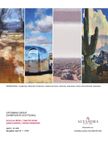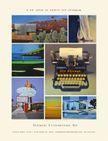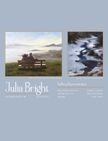
Altamira Fine Art in Scottsdale, Arizona, will host a show featuring Timothy Horn, Douglas Fryer, Jared Sanders and Dennis Ziemienski beginning April 8 with an opening reception April 10 from 7 to 9 p.m. The four artists are brought together around the exhibition’s title, Desert Muse. They are also united by a collective spirit of modernism in both their style and subject matter.
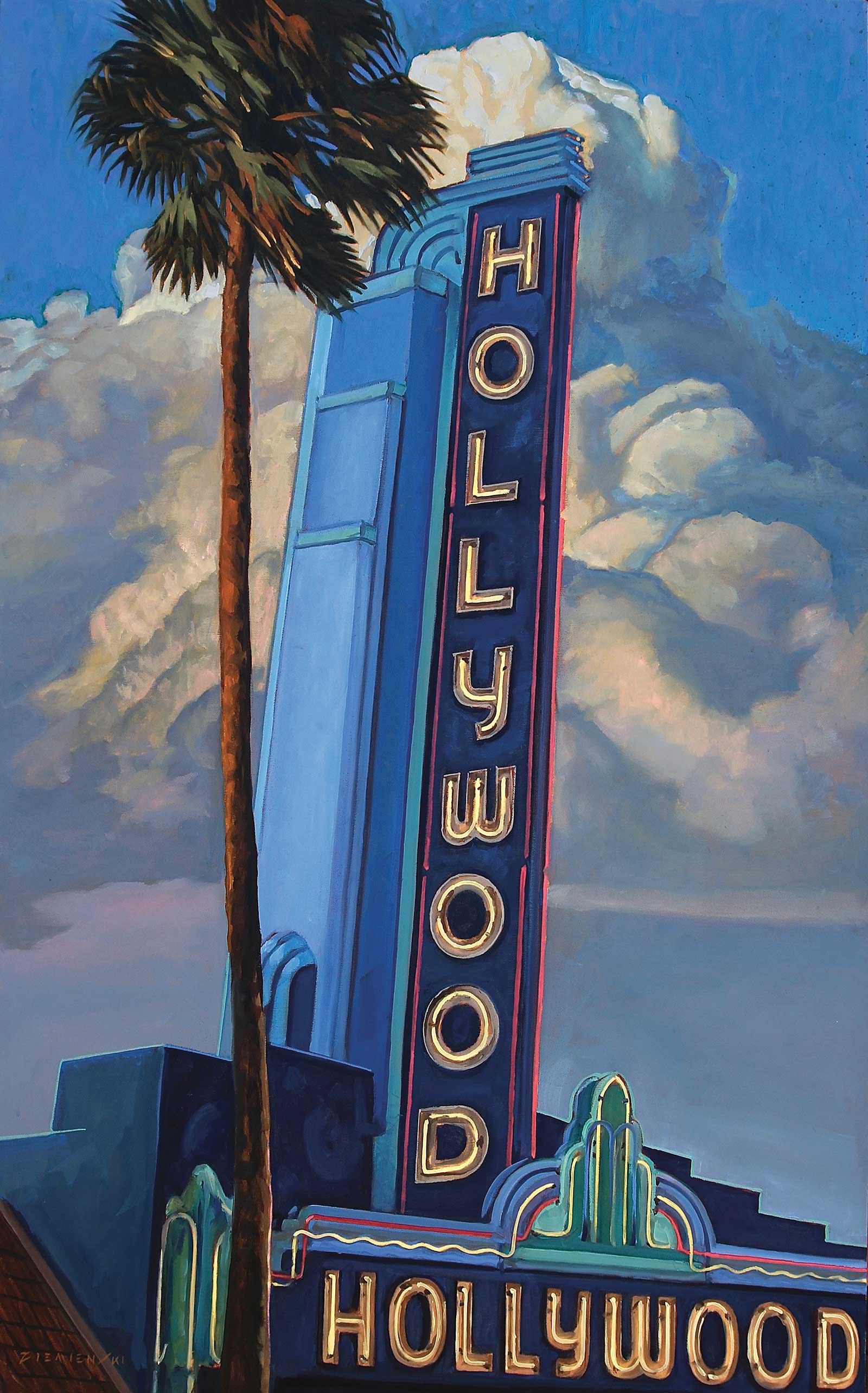 Dennis Ziemienski, Sunrise on the Boulevard, oil on canvas, 45 x 28"
Ziemienski’s mid-century modern, Palm Springs swimming pools, Hollywood, neon-sign vision of the West produced with the exacting line of a former illustrator defies dusty cattle drive notions of Western art. Planes, trains and automobiles, not just horses.
“It’s all part of the West,” Ziemienski says. “You can get nostalgic and go way back to the covered-wagon days and the cowboys and Indian days like some of the earlier Western work, but when you start moving up, then you have automobiles and airplanes, and even some of that is nostalgic.”
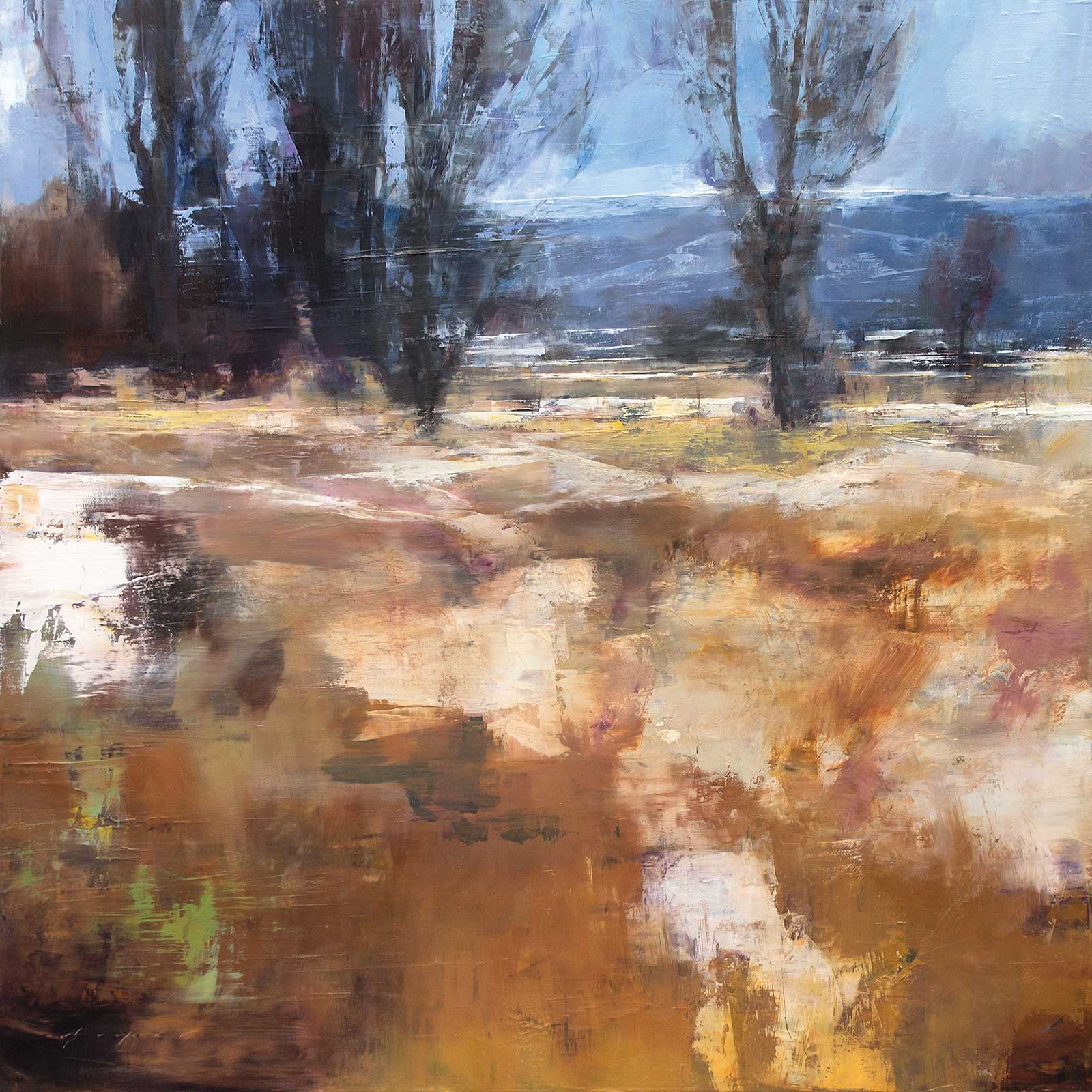
Douglas Fryer, Winter Gold, oil on canvas, 48 x 48"
Nineteenth-century nostalgia is noticeably absent from the artworks on view and for sale in the show. “Western art has too long been defined by subjects and style and therefore we come to expect that it is painted in the style of, or that the subject will be of these things, and so it becomes, in a way, weighed down by sentimentality and nostalgia,” Fryer says. “Those subjects become exploited, and as viewers, our sentiments become manipulated, because there’s a certain expected reaction we must have to the same pictures of cowboys and Native Americans or the grand vistas that are recognizable.”
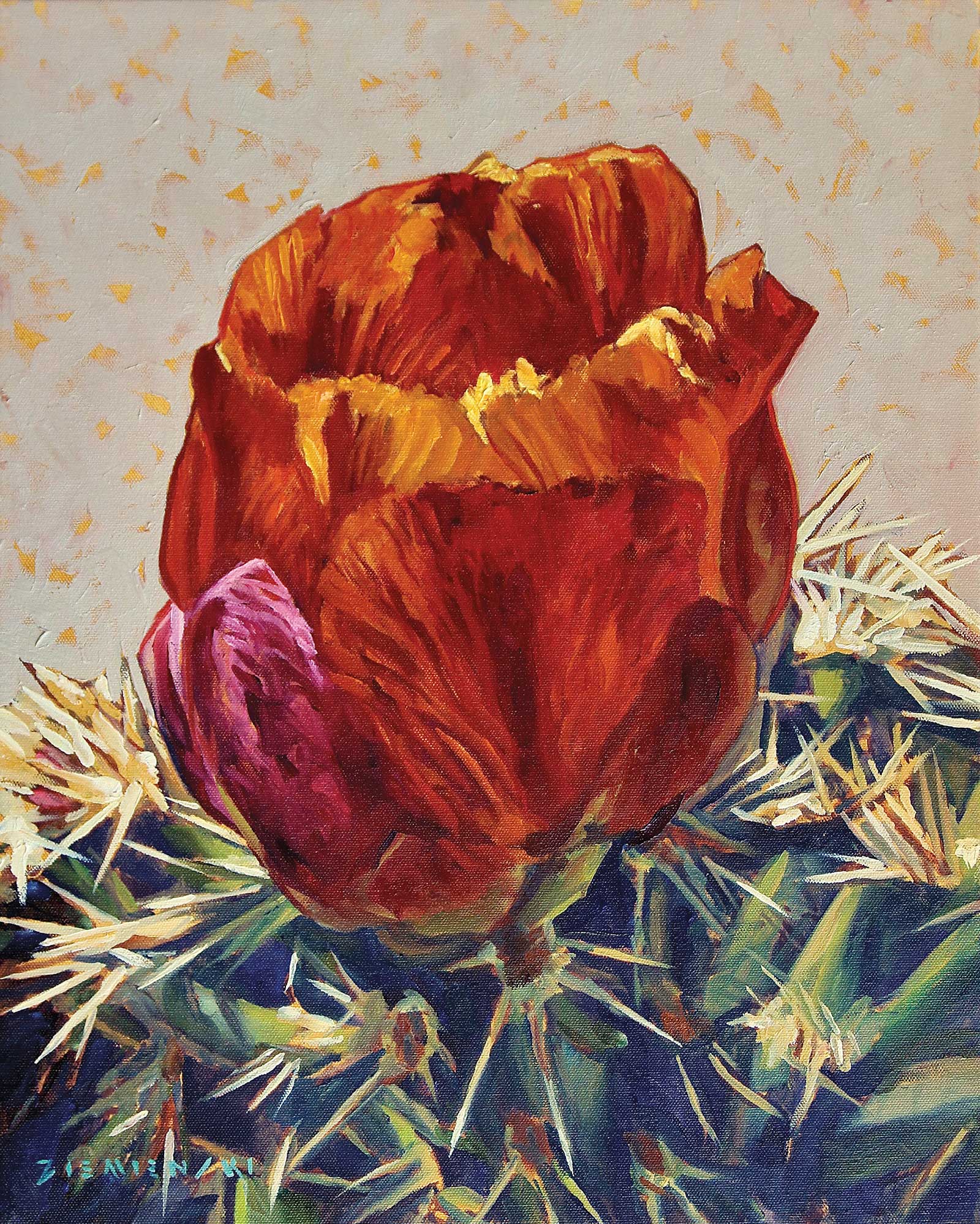
Dennis Ziemienski, Cactus Flower, oil on canvas, 20 x 16"
Fryer doesn’t paint grand vistas. No Grand Canyons or Grand Tetons. In fact, the scene for one of his artworks in the show, Winter Gold, he describes as “mundane.”
“It’s winter and there’s a bunch of weeds and bare trees,” he explains. “I try to see value in subjects that are normally not even noticed. They’re taken for granted, glimpses out of my peripheral vision, a glance to the side as I’m driving down the highway and an image is locked into my head.”
Fryer’s abstracted landscapes barely hold on to a representational edge. True to modern art, he finds more magic in the making than the subject.
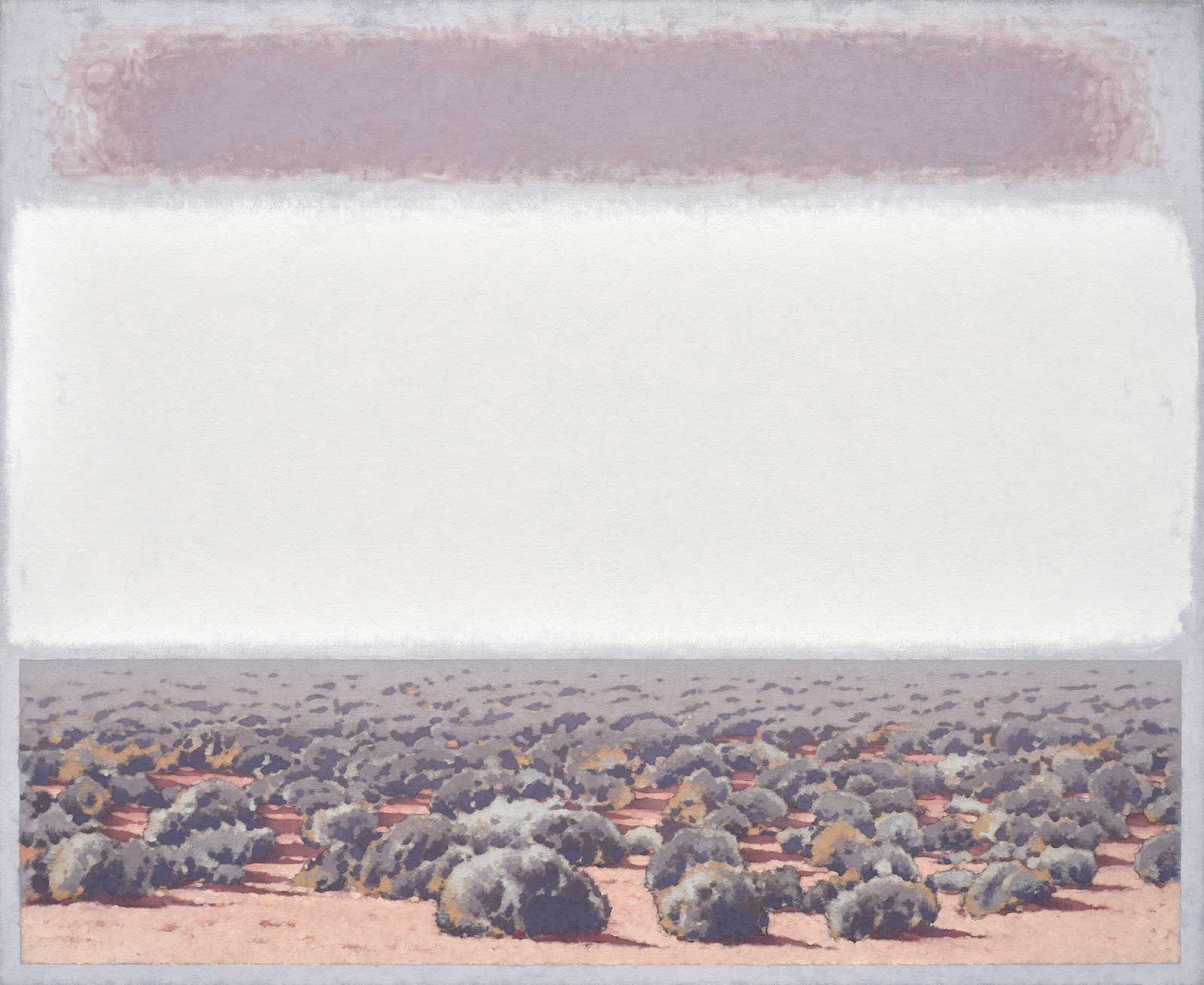
Jared Sanders, Forever, oil on canvas, 48 x 59"
“[Painting] has to do more with emotion and concept and forms,” he adds. “That’s what’s intriguing to me.”
Horn’s modernist perspective of the West carries the 1960s forward to today. He painted his first vintage Airstream trailer in 2006. His interests extend to old-school Volkswagen buses, roadside culture before the interstates and now, away from the interstates, and outskirts.
“I like the desert, but I also like the scrappy edge of small towns and rural areas where you’re in between a village or a town and completely out in the country; it’s that edge that I like,” he says.
About five years ago, on a whim, he bought a classic Airstream of his own.
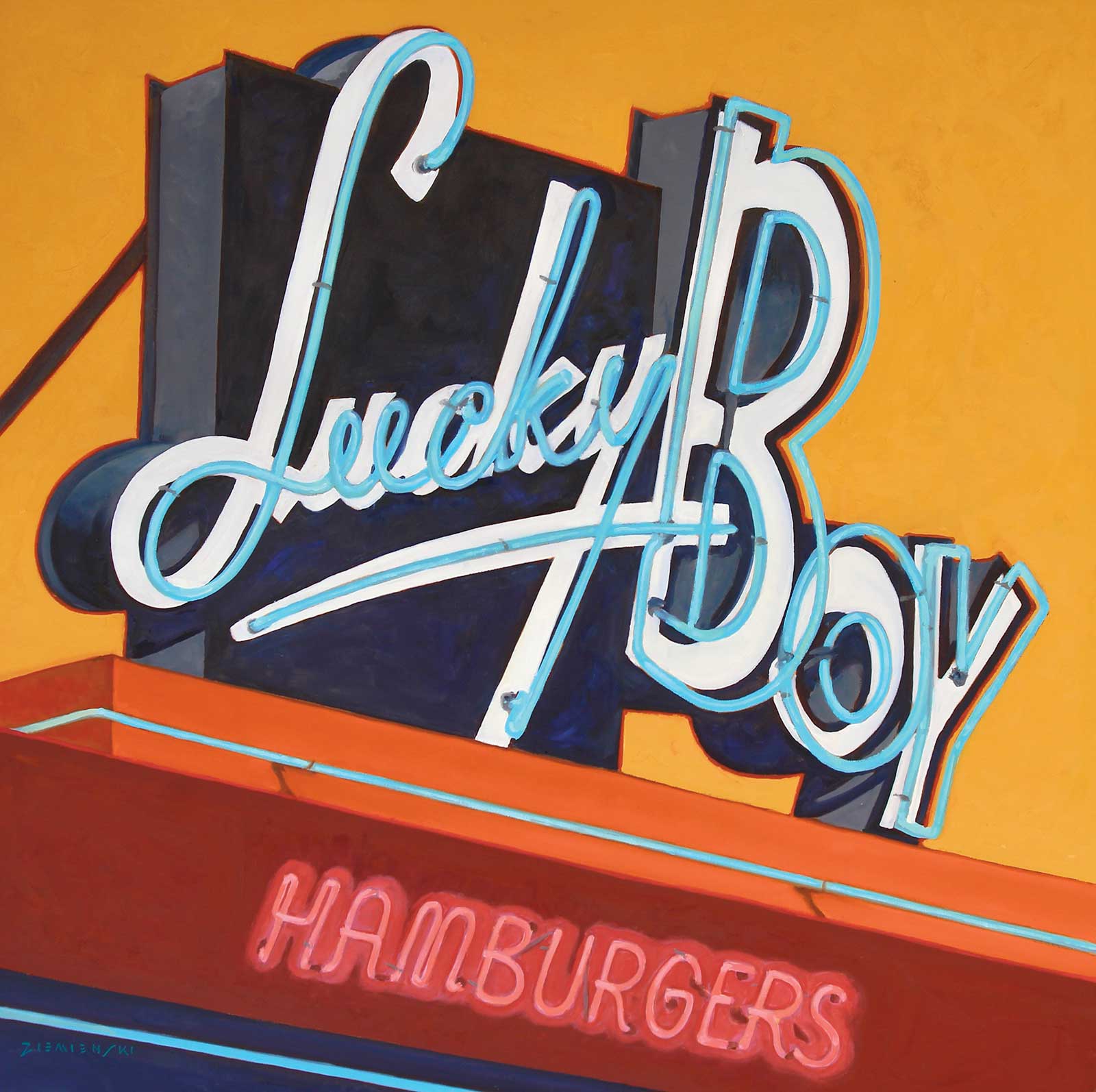
Dennis Ziemienski, Lucky Boy, oil on canvas, 40 x 40"
“It’s turned out to be fantastic because I’ve taken it down in the desert to go camping in Joshua Tree and Borrego Springs (California) and it’s been an absolutely amazing experience to be on land in the middle of nowhere,” Horn said. “I never thought that I would fall in love with the desert, but that experience of being out there in this tiny silver bean has been incredible.”
Horn continues painting Airstreams—and VW bugs and buses—with a modern twist. He often depicts the Western landscape as reflected in the “silver bean.” Separately, his “shadow selfies” provide an ultra-modern take on the century’s old self-portrait, with Horn painting the shadow he casts on a subject while photographing it with his smartphone.
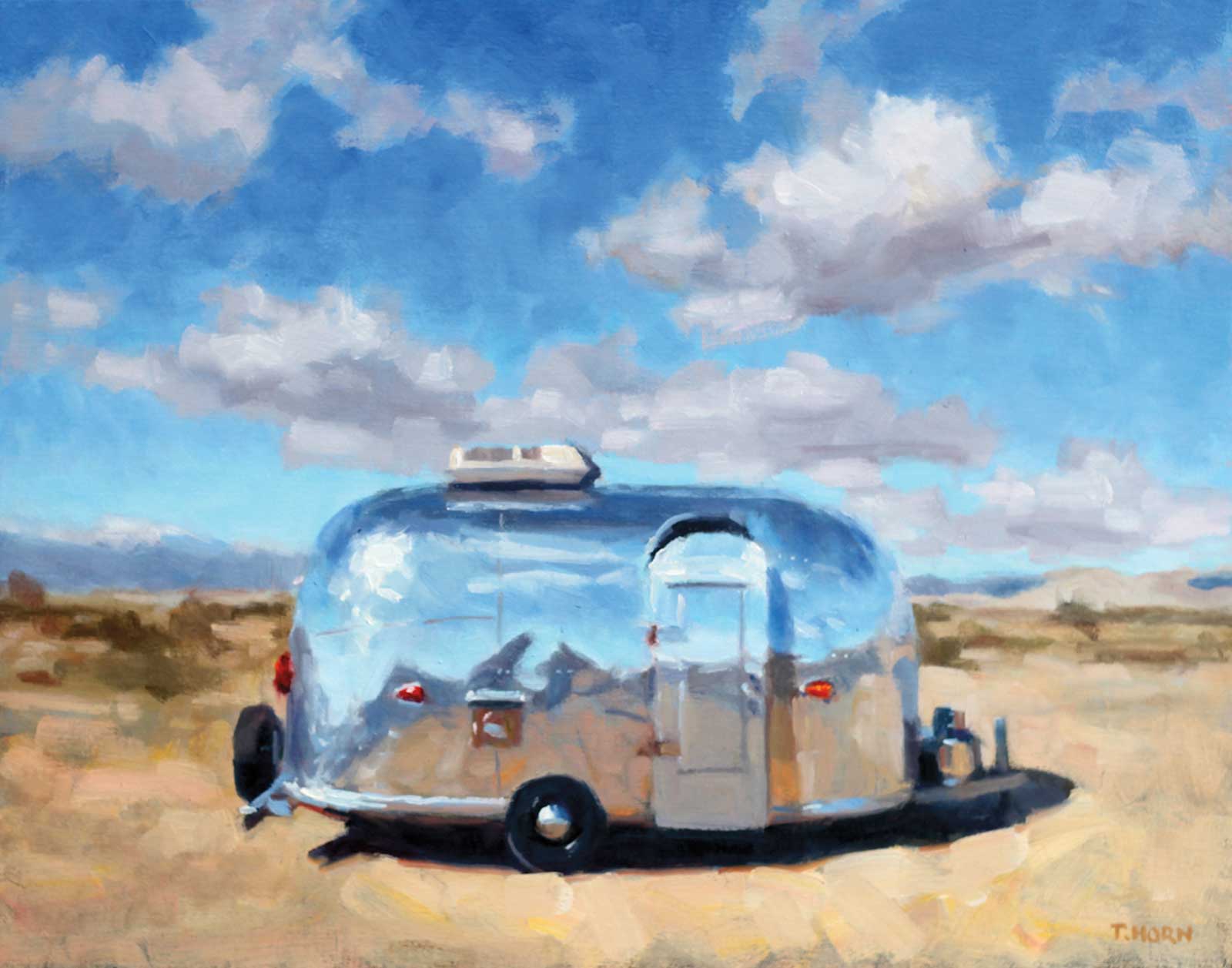
Timothy Horn, Airstream with Clouds, oil on canvas, 16 x 20"
“Western art is a huge, huge thing, but I personally am not in love with painting cowboys and Indians because I feel like we just don’t see that anymore, at least not the way they are commonly depicted in paintings,” Horn says. “There are American Indians in the West, but their life is very different than what is idealized in a lot of these images.”
Perhaps the most modern, and most traditional, artwork in Desert Muse is Sanders’ massive 48-by-59-inch painting titled Forever. Above a prototypical sea of desert sage, a sky unmistakably nodding to abstract expressionist Mark Rothko’s meditative, stacked, floating rectangles looms. He has increasingly been exploring the mash-up, but never taken it as far as in Forever.
“When I started doing that, I didn’t have any reservations, I was very excited about it,” Sanders says. “The hesitations came afterwards when they hung the show. There’s a fear of them not being accepted or liked as much as my older work.”
Change is inevitable. Evolution progresses. Even for a genre as traditional as Western art and a subject as classic as the desert. —
Altamira Fine Art 7038 E. Main Street • Scottsdale, AZ 85251 (480) 949-1256 • wwwaltamiraart.com
Powered by Froala Editor